lbteint module
This module, lbteint.py contains the integral solvers
for the linearized Boltzmann Transport equations.
Contains the routines to perform the Boltzmann transport integrals.
-
lbteint.analytic_k_space_energy(kx, ky, kz, effmass, e_shift)¶ Returns the parabolic energy dispersion.
- Parameters
- transportobject
A Transport() object
- kxfloat
The
 in cartesian coordinates.
- kyfloat
The
 in cartesian coordinates.
- kzfloat
The
 in cartesian coordinates.
- effmassndarray
- Dimension: (3)
The effective mass along
,
and , respectively.
- Returns
- float
The energy value in eV.
Warning
This routine only accepts the diagonal elements of the effective mass tensor
-
lbteint.analytic_k_space_integrand(kz, ky, kx, eta, beta, effmass, e0, i, l, m)¶ Returns the integrand for the anlytic reciprocal space integration of the transport tensor.
- Parameters
- kzfloat
The
in cartesian coordinates.- kyfloat
The
in cartesian coordinates.- kxfloat
The
in cartesian coordinates.- etafloat
The reduced chemical potential.
- betafloat
The
 factor,
  in eV.
- effmassfloat
The effective mass in units of the free electron mass.
- e0float
The energy shift, e.g.
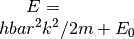 ,
where
,
where  is the energy shift in eV.
- iint
The order of the transport tensor.
- l{0,1,2}
The first index of the transport tensor.
- m{0,1,2}
The second index of the transport tensor.
- Returns
- float
The integrand value.
-
lbteint.analytic_k_space_velocity(kx, ky, kz, effmass, i)¶ Returns the parabolic velocity dispersion.
- Parameters
- kxfloat
The
in cartesian coordinates.- kyfloat
The
in cartesian coordinates.- kzfloat
The
in cartesian coordinates.- effmassndarray
- Dimension: (3)
The effective mass along
,
and , respectively. - i{0,1,2}
The direction to evaluate the velocity (0 is along
etc.).
- Returns
- float
The velocity in eVAA.
Warning
This routine only accepts the diagonal elements of the effective mass tensor. The
 factor is not
returned and need to be introduced
externally.
factor is not
returned and need to be introduced
externally.
-
lbteint.concatenate_integrand(energies, velocities, scatter, spin_fact, chempot, beta, order)¶ Concatenates the integrand in the Boltzmann transport integral.
-
lbteint.concatenate_integrand_band(energies, velocities, tau, spin_fact, chempot, beta, order)¶ Concatenates the integrand in the Boltzmann transport integral and sums the bands.
-
lbteint.fermiintclosed(order, eta, spin_fact)¶ Returns the value of the closed expressions for the Fermi integrals.
-
lbteint.integrandpar(eps, transport, w0, eta, beta, energy_trans, effmass, i)¶ Returns the integrand used in the analytic energy integration of the transport coefficients in
integrate_e()- Parameters
- epsfloat
The reduced carrier energy.
- transportobject
A Transport() object.
- w0ndarray
- Dimension: (12)
Contains the scattering rate prefactor for the different scattering mechanisms in units of inverse fs.
- etafloat
The reduced chemical potential.
- betafloat
The
factor in eV.- energy_transndarray
- Dimension: (12)
Contains the energy transitions (that is added to the energy in
 , typically,
 , where
  is the size of the energy transition. Set it to zero
for the non-relevant scattering mechanisms.
is the size of the energy transition. Set it to zero
for the non-relevant scattering mechanisms. - effmassfloat
The effective mass in units of the electron mass.
- iint
The order of the transport integral to be evaluated.
- Returns
- float
The integrand value.
Notes
The total scattering is calculated based on the well known scattering models for parabolic energy dispersions
 ,
where
,
where  is the scattering factor.
-
lbteint.integrandpardos(eps, transport, w0, eta, beta, energy_trans, effmass, i)¶ The integrand for the density of states integral over energy.
- Parameters
- epsfloat
The reduced carrier energy
- transportobject
A Transport() object
- w0ndarray
- Dimension: (12)
Contains the scattering rate prefactor for the different scattering mechanisms in units of inverse fs. Not used in this routine, but it needs the dummy from the call argument.
- etafloat
The reduced chemical potential
- betafloat
The
factor in eV. Not
used in this routine, but it needs the dummy from the
call argument.- energy_transndarray
- Dimension: (12)
Contains the energy transitions (that is added to the energy in
, typically,
, where
is the size of the energy transition. Set it to zero
for the non-relevant scattering mechanisms. Not
used in this routine, but it needs the dummy from the
call argument. - effmassfloat
The effective mass in units of the electron mass. Not used in this routine, but it needs the dummy from the call argument.
- iint
The order of the transport integral to be evaluated. Not used in this routine, but it needs the dummy from the call argument.
- Returns
- float
The integrand value for the density of states.
Notes
Calculates the density of states integrand
-
lbteint.integrandpart2(eps, transport, w0, eta, beta, energy_trans, effmass, i)¶ Returns the integrand used in the analytic energy integration of the transport distribution function with a quadratic
 term
term- Parameters
- epsfloat
The reduced carrier energy.
- transportobject
A Transport() object.
- w0ndarray
- Dimension: (12)
Contains the scattering rate prefactor for the different scattering mechanisms in units of inverse fs.
- etafloat
The reduced chemical potential.
- betafloat
The
factor in eV.- energy_transndarray
- Dimension: (12)
Contains the energy transitions (that is added to the energy in
,
typically, ,
where is the size of the
energy transition. Set it to zero for the
non-relevant scattering mechanisms. - effmassfloat
The effective mass in units of the electron mass.
- iint
The order of the transport integral to be evaluated.
- Returns
- float
The integrand value.
Notes
The total scattering is calculated based on the well known scattering models for parabolic energy dispersions
,
where is the scattering factor.
Difference from integrandpar(): here tau^2 is used in the integrand (for the calculation of the Hall factor).
-
lbteint.scipy_e_integrals(transport, integrand, e_min, e_max, w0, eta, beta, energy_trans, effmass, order, spin_fact, method='quad')¶ Calculates the one dimensional energy integrals.
Uses the SciPy function
scipy.integrate.quad().- Parameters
- transportobject
A Transport() object
- integrand{“normal”,”hall”,”dos”}
Selects the type of integrand to be used. “normal” selects
integrandpar(). “hall” selectsintegrandpart2(), “dos” selectsintegrandpardos().- e_minfloat
The lower integration limit in eV.
- e_maxfloat
The higher integration limit in eV.
- w0ndarray
- Dimension: (12)
Contains the scattering rate prefactor (inverse of relaxation time) for the different scattering mechanisms in units of inverse fs.
- etafloat
The reduced chemical potential.
- betafloat
The
factor, 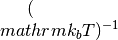 in eV.
- effmassndarray
- Dimension: (3)
The effective mass along the three reciprocal unit vectors in units of the free electron mass.
- e0float
The energy shift, e.g.
,
where is the energy shift in eV.- iint
The order of the transport tensor.
- l{0,1,2}
The first index of the transport tensor.
- m{0,1,2}
The second index of the transport tensor.
- spin_factint
The spin degeneracy factor. 1 for non-spin degeneracy, 2 for spin degeneracy.
- method{“quad”}, optional
The SciPy three dimensional integration method using
scipy.integrate.quad().
- Returns
- float
The resulting integral over energy.
-
lbteint.scipy_k_integrals(eta, beta, effmass, e0, i, l, m, method='tplquad')¶ Calculates the three dimensional wave vector integrals.
Uses the SciPy function
scipy.integrate.tplquad().- Parameters
- etafloat
The reduced chemical potential
- betafloat
The
factor, in
eV.- effmassndarray
- Dimension: (3)
The effective mass along the three reciprocal unit vectors in units of the free electron mass.
- e0float
The energy shift, e.g.
, where
is the energy shift in eV.- iint
The order of the transport tensor.
- l{0,1,2}
The first index of the transport tensor
- m{0,1,2}
The second index of the transport tensor
- method{“tplquad”}, optional
The SciPy three dimensional integration method using
scipy.integrate.tplquad().
- Returns
- float
The resulting integral over the wave vectors.
See also
-
lbteint.scipy_k_integrals_discrete(tr, integrand_type, energies, velocities, scatter, chempot, beta, order, spin_fact, method='trapz')¶ Calculates the three dimensional integrals over the k-points for discrete data.
Uses SciPy integration functions for discrete data.
- Parameters
- trobject
A Transport() object
- energies: ndarray
Contains the band energies in eV for each k-point.
- velocities: ndarray
Contains the derivative if energies without the \hbar factors for each k-point.
- scatter:
Contains the relaxation time at each k-point.
- chempotfloat
The chemical potential in eV
- betafloat
The
factor, in eV.- spin_factint
The spin factor, 1 for non-spin degeneracy and 2 for spin degeneracy.
- method{“trapz”, “simps”, “romb”}, optional
The SciPy three dimensional integration method for the
scipy.integrate.trapz(),scipy.integrate.simps()and thescipy.integrate.romb()functions, respectively. Defaults to “trapz”.
- Returns
- integralfloat
The resulting integral over the wave vectors.
-
lbteint.scipy_k_integrals_discrete2(tr, energies, velocities, scatter, chempot, beta, spin_fact, order, method='trapz')¶ Calculates the three dimensional integrals over the k-points for discrete data.
Uses integration functions for discrete data.
- Parameters
- trobject
A Transport() object
- chempotfloat
The chemical potential in eV
- betafloat
The
factor, in eV.- spin_factint
The spin factor, 1 for non-spin degeneracy and 2 for spin degeneracy.
- kx, ky, kzfloat, float, float
The spacing in inverse AA between the points along each direction.
- orderfloat
The order of the energy minus chemical potential term in the denominator.
- method{“trapz”, “simps”, “romb”}, optional
The SciPy three dimensional integration method for the
scipy.integrate.trapz(),scipy.integrate.simps()and thescipy.integrate.romb()functions, respectively. Defaults to “trapz”.